

Golf Books Every Weekend Warrior Actually Needs to Read
Golf books serves a valuable place online unlike the internet are completely full of swing gurus, self-proclaimed experts, and clickbait videos promising the “one secret loop” that will instantly cure your slice and add 30 yards to your drive.
If you ask me, most of it is just loud noise.
Over the years, I’ve realized there is a massive difference between trying to build a perfect golf swing and learning how to play better golf. To bridge that gap, I went back to the basics and put together a list of five books. In my opinion, these are the only five books a weekend warrior needs to read to understand the game in its simplest, most rewarding form.
1. Five Lessons: The Modern Fundamentals of Golf by Ben Hogan
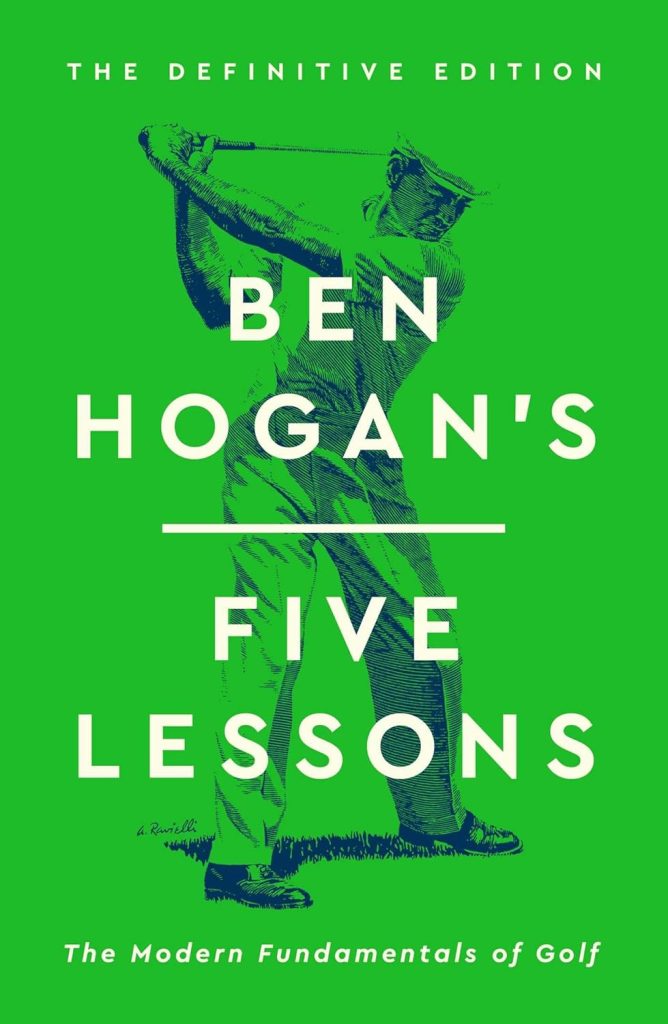
I really don’t like talking about intense, rigid swing mechanics on this blog, but we have to start with the OG of golf instruction.
Written all the way back in 1957, this golf book is basically the blueprint of the physical swing. Hogan breaks the entire motion down into just five basic building blocks:
- the grip
- stance
- posture
- the first part of the backswing
- the downswing.
That’s it. He believed that if your setup and grip are fundamentally sound, the rest of the swing naturally falls into place. It’s a short, highly illustrated read, and it has stood the test of time for a reason. As far as golf books go, if you’ve never read it, start here.
2. Harvey Penick’s Little Red Book
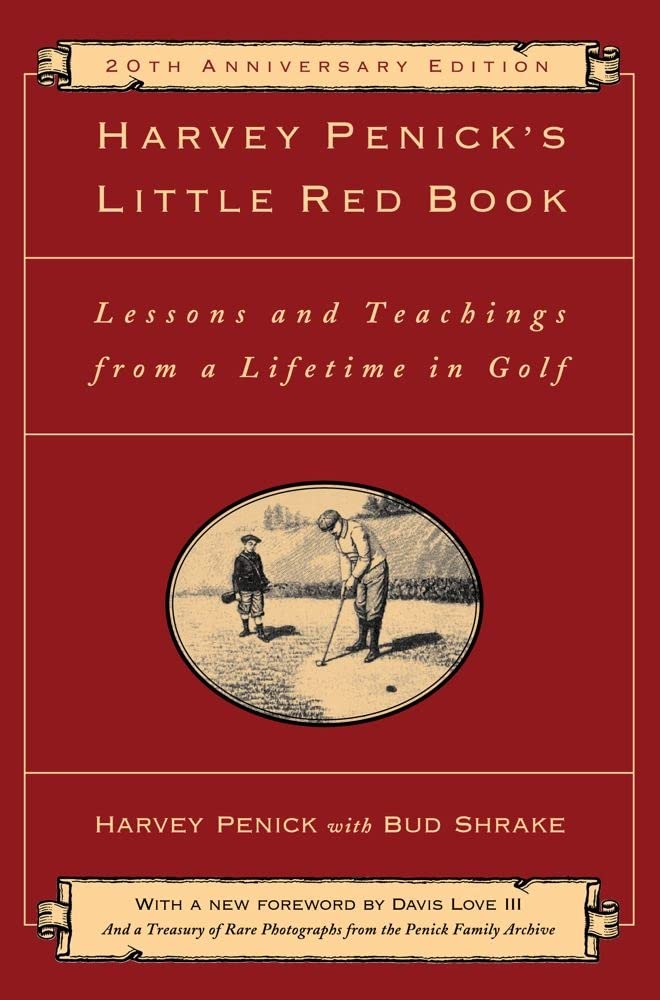
If you have no clue who Harvey Penick is, don’t feel bad. He was a quiet, legendary coach from Texas who worked with hall-of-famers like Ben Crenshaw and Tom Kite. When he retired, he published the notes he’d kept in a little red pocket notebook for decades.
The reason I love this book is because Harvey truly believed that golf is hard enough already—so instruction should be dead simple. He didn’t teach a rigid “system.” He taught the human being standing in front of him, prioritizing feel over cold mechanics.
Some of his best pieces of advice are timeless:
- “Take dead aim.” Pick a specific target (like a dimple on a distant tree or a single leaf behind the green) and commit to it completely.
- “Grip down, don’t choke down.” Words matter. “Choking” sounds tense and fearful; “gripping down” feels controlled. Keep your mind relaxed.
It doesn’t read like traditional golf books but more like a collection of wise, gentle stories from a grandfather who just happens to know everything about golf.
3. Every Shot Counts by Mark Broadie
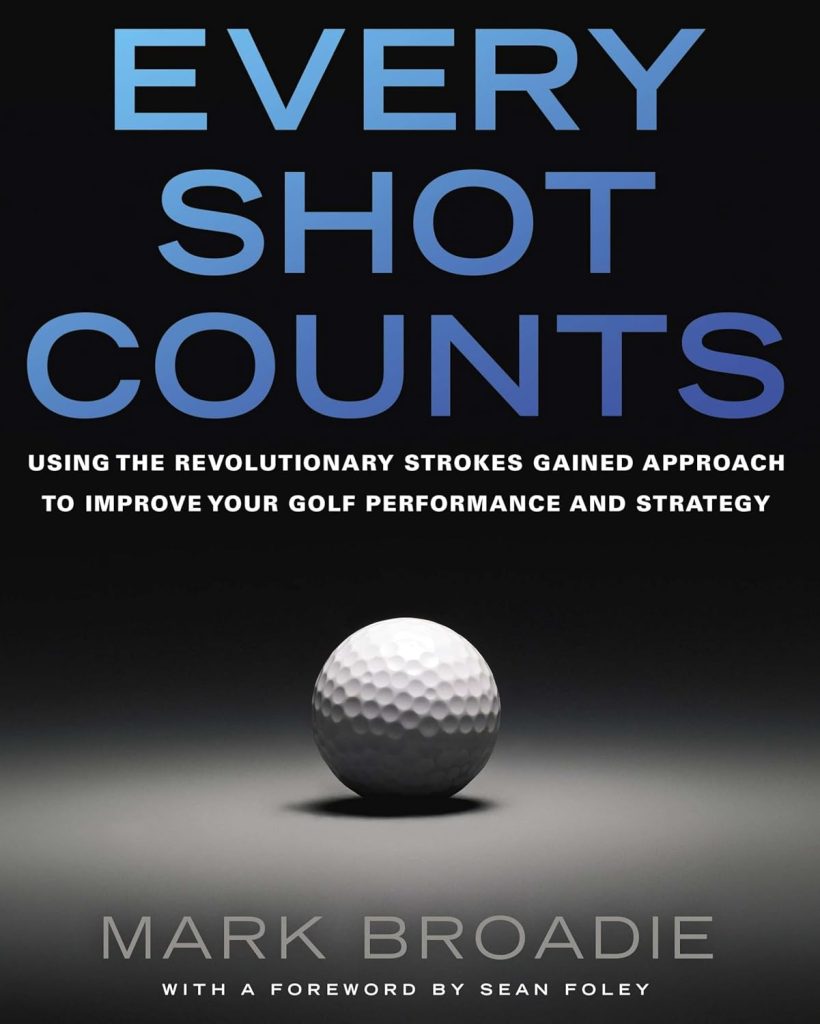
This next one is completely different. It isn’t an instructional book at all—it’s a data book.
Mark Broadie is the Columbia Business School professor who invented the “Strokes Gained” system that the PGA Tour uses today. His system measures every single shot relative to what an average golfer would expect to do from that exact position.
When he turned his data filters onto regular amateur players, he found a few things that completely blew up traditional golf wisdom:
- The long game matters way more than putting: We’ve all heard the old phrase “drive for show, putt for dough.” Broadie proved that’s a myth. The biggest separator between a good player and a high-handicapper isn’t the putting green—it’s driving and approach iron play. In fact, approach play alone accounts for about 40% of a great player’s advantage.
- We obsess over the wrong things: If you three-putt a green from 40 feet out, you walk off frustrated thinking your putting is broken. Broadie points out that you didn’t putt badly—you just hit a mediocre approach shot that left you 40 feet away in the first place.
- Course management is a game of probability: Instead of looking at a tight pin tucked behind a lake and asking, “Can I pull this shot off?” Broadie teaches you to ask: “If I hit this shot 100 times, which target produces the lowest average score?” (Hint: It’s almost always the safe middle of the green).
4. The Elements of Scoring by Raymond Floyd
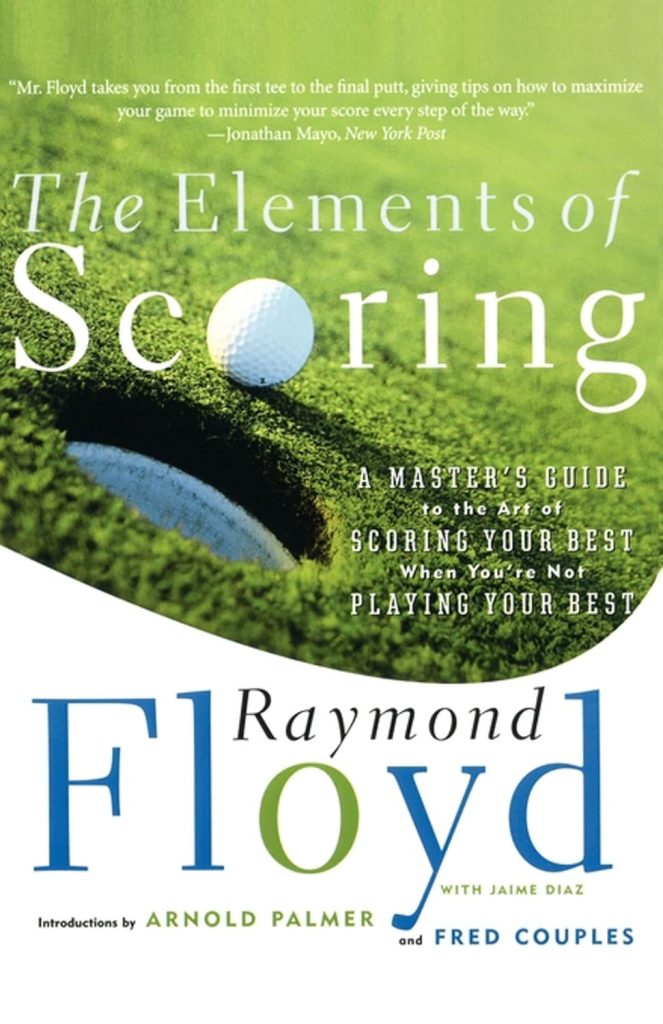
Published in 1990, this book is the perfect, fascinating counterpoint to both Harvey Penick’s feels and Mark Broadie’s math.
Raymond Floyd focuses almost entirely on the habits and mindset required to actually post a lower number on your scorecard. It is incredibly refreshing to read, because golf has an endless supply of people trying to perfect their swing on the driving range while shooting the exact same 92 they shot three years ago. Golf books have rarely tapped into this for amateur players.
Floyd’s central argument is simple: Scoring is a skill completely separate from ball-striking. You do not need a perfect swing to shoot a good score. You just need to manage your emotions and make smart choices. He famously argued that too many amateurs play “golf swing” out on the course instead of playing “golf score.”
His biggest golden rules?
- Play the game, not the practice range: Accept your imperfect shots on Saturday morning and just find a way to get the ball into the cup.
- Avoid the big numbers: One double-bogey or triple-bogey hurts your scorecard way more than a couple of missed birdie putts. When you get into trouble, take your medicine, punch out safely, and move on.
5. Golf is Not a Game of Perfect by Dr. Bob Rotella
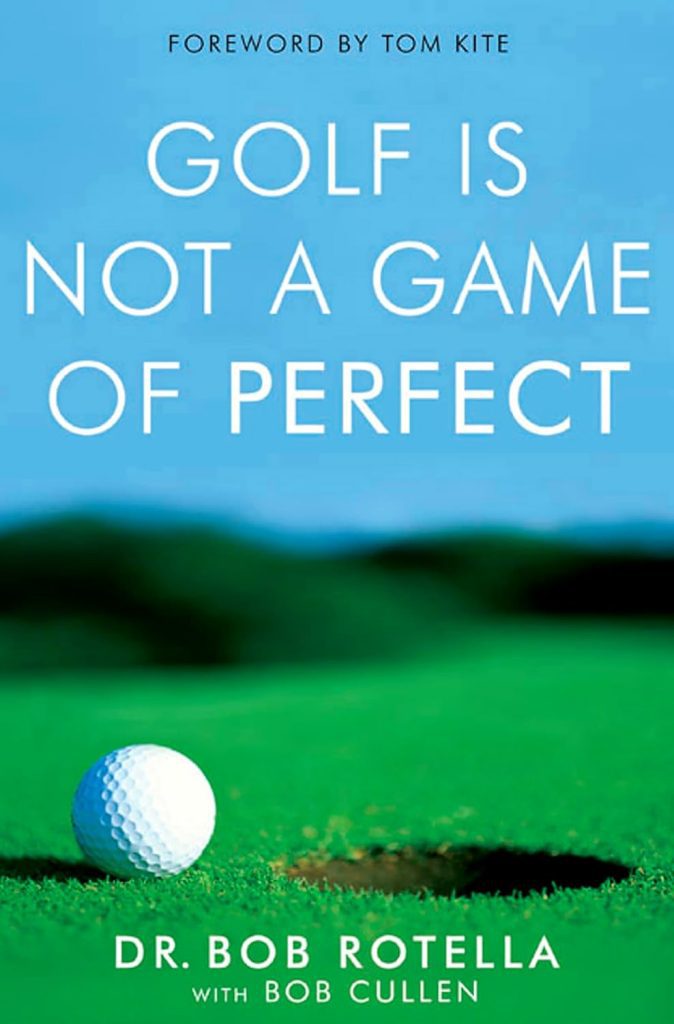
To wrap this list up, we have to look at the psychological side of the game. Dr. Bob Rotella is the most famous sports psychologist in golf history, and this book is an absolute masterpiece.
Rotella’s whole philosophy aligns perfectly with Raymond Floyd’s. He argues that the biggest mistake weekend golfers make is stepping over a ball trying to hit a “perfect” shot.
When you demand perfection from yourself, your body locks up with tension. Instead, Rotella teaches you how to accept the inherent chaos of golf. He shows you how to build a bulletproof pre-shot routine, how to play with an aggressive mind but a conservative target, and how to completely forget about your bad shots the second they leave the clubface.
If you find yourself getting angry on the course or letting one bad hole ruin your entire back nine, buy this book immediately.
The Big Takeaway: If you look closely at all five of these golf books, they all point toward the exact same conclusion: Golf is played on a grass field, not a spreadsheet. You don’t need a picture-perfect PGA Tour takeaway to break 90 or even break 80. You just need a solid grip, a simple rhythm, a basic understanding of your own personal miss, and the discipline to stop chasing flags you have no business hitting at.
What to read next: How Jon Sherman Changed My Expectations